
Last reviewed and updated: 2026-09-28
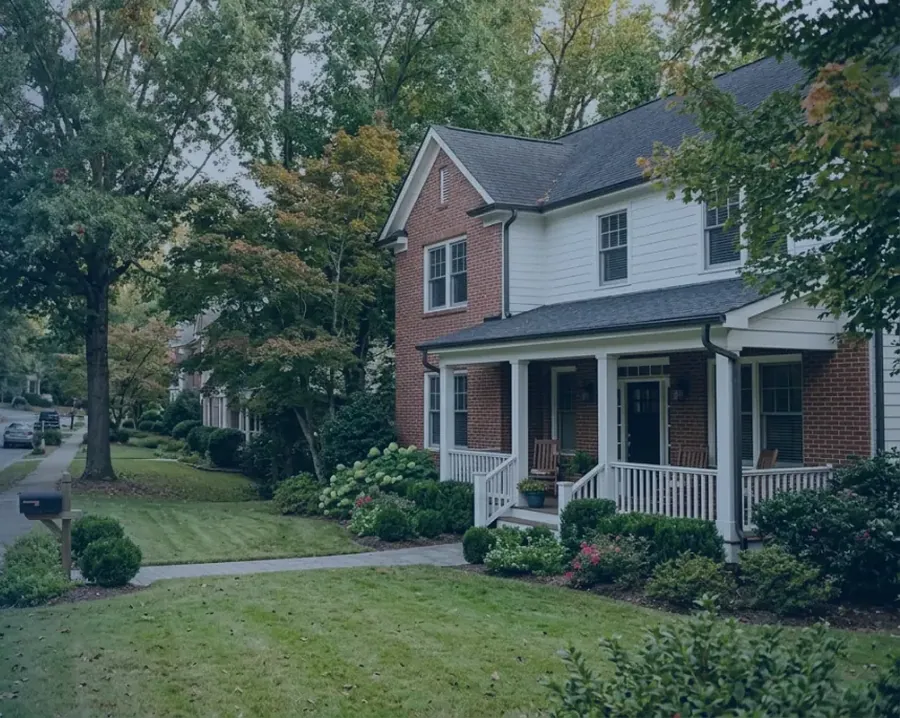
North Marietta Neighborhood is a named residential community in the Marietta area. In neighborhoods built out in a single phase, the plumbing tends to be consistent from house to house, same era, same material, same installer, which makes diagnosis faster and means failures often arrive in clusters rather than one at a time.
The starting point is always the same: confirm the leak at the meter, establish whether it is inside the house or out in the buried service line, then locate it without opening anything.
Start at the water meter
Before anything else, confirm the leak exists. Turn off every tap, appliance, icemaker and irrigation zone, then find your meter, usually in a covered box near the curb, and watch the low-flow indicator. It is a small triangle, star or dial designed to turn at very low flow rates. If it moves while nothing is running, water is escaping somewhere on your side of the meter.
- Record the full reading and leave the property untouched for one to two hours.
- Read it again. Any change confirms a leak, even if the indicator was moving too slowly to see.
- Close the main house shut-off and re-check. Still moving means the leak is in the buried service line between the meter and the house. Stopped means it is inside or under the house.
- Isolate irrigation separately if you have sprinklers, since they usually tee off before the house valves.
That single test costs nothing and narrows the problem more than anything else you can do yourself.
Tree roots and older sewer laterals
Marietta's mature tree canopy is one of the best things about living here and one of the hardest things on its sewer laterals.
Roots seek moisture and find it escaping at the joints of older clay and cast iron pipe. Once inside, they trap solids, which is why the first symptom is usually repeated backups rather than a visible leak. Cutting the roots clears the blockage but not the defect that let them in, so they grow back.
Drain lines are not pressurized, so acoustic listening does not work on them. They are diagnosed with a camera inspection that shows the inside of the line, cracks, joint offsets, root masses, bellies where the pipe has sagged, and with smoke testing for odor sources a camera cannot see. Repeated backups on the same line point to a structural repair rather than another cleaning.
Freeze damage and winter failures
A hard Marietta freeze reliably produces a run of burst-pipe calls, and the pattern is consistent.
The vulnerable runs are the ones in unconditioned space: crawlspaces, garages, exterior walls, attics and outdoor hose bibs. Water expands as it freezes, splits the pipe, and then does nothing at all until the thaw, which is when the damage actually appears, often while nobody is home. Water actively escaping is an emergency: close the main shut-off first.
Before winter, insulate exposed runs, seal crawlspace vents, disconnect hose pipes and know where your main shut-off valve is and that it actually turns. During a hard freeze, let a tap drip and open cabinet doors under sinks on exterior walls.
Worth knowing: Cobb County explicitly excludes faucets left dripping during freezing weather from its leak credit, the county treats that roughly 50 gallons as normal use, not a leak.
Want the leak found before anything is opened?
Acoustic listening, thermal imaging, pressure testing and tracer gas narrow it to a few inches first, so only that area has to be touched.
Buying or selling a house here
A leak changes a transaction, and it is far cheaper to know before contracts than after.
For a buyer, the two things worth establishing are the pipe material and the condition of the sewer lateral. Polybutylene routinely comes up at inspection, can affect insurance and financing in some cases, and gets priced into offers. A camera inspection of the lateral is inexpensive relative to a collapsed line under a mature front garden, particularly on an older property with big trees.
For a seller, a known leak is disclosable. Having it located and documented, with a written report and an invoice, is a considerably stronger position than a buyer's inspector finding damp of unknown origin and everyone assuming the worst.
Which water utility bills you here
Most addresses outside the City of Marietta utility service area are billed by Cobb County Water System, which allows a partial leak credit once per rolling 12-month period across no more than two affected months, with proof of repair required. A Marietta mailing address does not by itself make you a city utility customer, the name printed on your bill is what settles it.
Local notes
North Marietta covers a broad stretch of the city's northern side, so housing era varies considerably from street to street. The build date of your own house matters far more here than the neighborhood name does: it is what indicates the pipe material.
Frequently asked questions
Do you cover North Marietta Neighborhood?
Yes. North Marietta Neighborhood is within our regular Marietta and Cobb County service area.
Which water utility serves this community?
Most addresses outside the City of Marietta utility area are billed by Cobb County Water System, which allows a partial leak credit once per rolling 12-month period across no more than two affected months. Confirm from the utility name on your bill.
What is the first thing I should do?
Run the water meter test. Turn everything off and watch the low-flow indicator, any movement confirms a leak. Closing the main house valve and re-checking then tells you whether it is inside the house or in the buried service line.