
Last reviewed and updated: 2026-09-24
West Cobb developed later than the eastern side of the county, with a great deal of its housing built from the late 1990s onwards. That means less polybutylene and less forty-year-old copper, but much larger lots, longer buried service line runs from the street, and extensive irrigation systems. The leak profile shifts accordingly: fewer in-wall pipe failures, far more buried and irrigation leaks.
West Cobb's newer, larger-lot housing shifts the leak profile outdoors: long buried service lines and irrigation rather than pipe-age failures. Billing is Cobb County Water System throughout.
What makes West Cobb different
- Development era: weighted toward the late 1990s and 2000s, with older rural pockets
- Foundations: a mix of slab and basement, with basements common on sloping lots
- Likely pipe: copper and PEX in the newer stock; polybutylene only in the older pockets
- Lots: noticeably larger, meaning long service line runs and extensive irrigation
- Water utility: Cobb County Water System throughout
- Terrain: more rolling, which affects where buried leaks surface
Newer stock, different failures
Newer construction does not mean leak-free construction. It means different leaks. Installation defects, fittings that were never fully seated, pressure that was never regulated properly, and physical damage from landscaping and building work account for much more of the work here than age-related corrosion does.
The exception is West Cobb's older rural pockets, where homes predating the subdivision boom carry the same polybutylene and ageing copper issues as the rest of the county.
The leak profile here
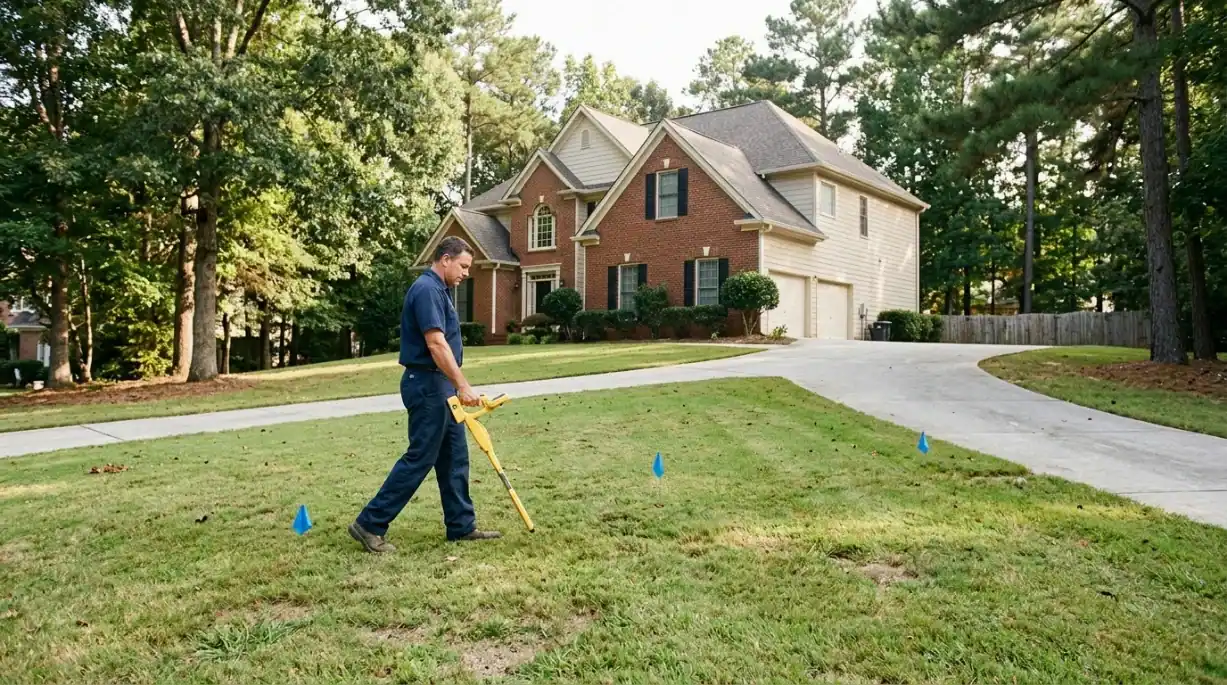
Large lots are the defining factor. A service line running a hundred feet or more from the meter to the house has a lot of opportunity to fail, and when it does the water drains into the soil with nothing visible indoors. Add substantial irrigation systems running overnight on timers and you get the classic West Cobb call: a very large water bill and no symptoms at all inside the house.
| Most common leak type | Why, in this area |
|---|---|
| Buried service line leaks | Long runs from street to house across large lots |
| Irrigation leaks | Extensive systems on large lots, running overnight on timers |
| Installation-defect leaks | Newer stock fails at workmanship points rather than from age |
| High-pressure pinholes | Unregulated or failed pressure-reducing valves |
| Slab leaks | In the slab-built subdivisions, usually from installation damage rather than corrosion |
| Polybutylene | Confined to the older rural pockets |
Which water utility bills you here
West Cobb is served by Cobb County Water System, so the county's leak adjustment applies: a partial credit once per rolling 12-month period across no more than two affected months, with proof of repair required. On a large lot with a long service line, that credit can matter a great deal, because these leaks tend to run undetected for a full billing cycle or more.
Corridors and lot conditions
The area takes in the Dallas Highway, Macland Road, Barrett Parkway and Due West corridors, and the Hillgrove, Harrison and Kennesaw Mountain school communities. Rolling terrain means water from a buried leak often travels downhill before surfacing, so the wet patch in the lawn is frequently well away from the actual break, which is exactly why tracing and correlation matter more here than digging where it looks wet.
Frequently asked questions
My West Cobb house is newer. Can it still have a leak?
Yes, just a different kind. Newer homes fail at workmanship points rather than from age, fittings that were never fully seated, unregulated water pressure, and physical damage from landscaping or construction work.
Why are service line leaks so common on large lots?
Because the run from the meter to the house is long, often a hundred feet or more. That is a lot of buried pipe, and when it fails the water drains into the soil producing no indoor symptoms at all: just a very large bill.
The wet patch in my lawn moved. Is that possible?
It is normal. On West Cobb's rolling terrain water from a buried leak follows the slope underground before surfacing, so the visible wet area is frequently well downhill of the break. Digging where it looks wet is how people end up with several holes and an unfound leak.
Does polybutylene affect West Cobb homes?
Much less than East Cobb, because most West Cobb housing was built after the polybutylene era ended in the mid-1990s. The exception is the older rural pockets that predate the subdivision boom, where it does turn up.
Which utility bills West Cobb?
Cobb County Water System, so the county leak adjustment process applies rather than the Marietta Power & Water one. Check the utility name on your bill to be certain.