
Last reviewed and updated: 2026-09-24
In Georgia, homeowners insurance generally pays for leak detection only as part of a covered loss, not as a standalone inspection. Where a leak has caused damage your policy covers, insurers commonly pay to locate the leak, access the pipe, and restore what had to be opened. If there is no damage to claim, the work is treated as maintenance and is usually not covered. The exclusions that most often defeat a claim are earth movement and gradual deterioration or wear and tear.
Insurers generally pay to reach and repair covered damage rather than to maintain plumbing, which is why the written report matters. A utility leak credit is a separate claim with its own paperwork.
This is general information, not insurance advice. Coverage depends entirely on the wording of your own policy. Read it, and speak to your agent or carrier before work begins.
What insurers typically do and do not pay for
| Item | Usually covered? | Why |
|---|---|---|
| Locating the leak, as part of a covered loss | Often yes | Treated as a necessary cost of the claim |
| Access: opening the slab, wall or floor | Often yes | Necessary to reach the damaged pipe |
| Restoration of what was opened | Often yes | Restoring the covered structure, including repouring concrete |
| Resulting water damage to floors, cabinets, drywall | Often yes | The covered loss itself, subject to deductible and limits |
| The pipe repair itself | Frequently not | Often excluded as maintenance of the system |
| Standalone preventive inspection | Generally no | No damage means no covered loss to attach it to |
| Damage from long-term seepage | Often not | Gradual deterioration exclusion |
| Damage attributed to earth movement | Usually not | Standard earth movement exclusion |
A public adjuster describing typical slab-leak claim handling summarized what carriers commonly pay for as "leak detection, access to the pipe, treating the soil, and pouring new concrete into the void." The pattern is consistent: insurers pay to reach and repair the damage, not to maintain the plumbing.
Are water main leaks covered by insurance?
This is the question people ask after seeing water in the street, and the answer turns on one distinction that has nothing to do with the policy wording.
The water main is the utility's pipe, running under the road and serving the whole street. If it breaks, it is Cobb County Water System's or Marietta Power & Water's to repair, at their cost, and your homeowners policy is not involved at all. Damage a main break causes to your property is pursued with the utility rather than your insurer.
The service line is the buried pipe from the meter to your house, and it is yours. When it fails, the repair is your expense. Standard homeowners policies in Georgia have historically not covered the buried service line itself, although many carriers now sell service line coverage as an optional endorsement for a small annual amount. Whether you have it depends entirely on what was purchased.
| What failed | Whose pipe | Who normally pays |
|---|---|---|
| Water main in the street | The utility | The utility repairs it; property damage is pursued with them |
| The meter itself | The utility | The utility |
| Service line, meter to house | The homeowner | You, unless service line coverage was purchased |
| Pipe under the slab or inside the house | The homeowner | You for the pipe; the insurer often for the resulting damage and access |
The test that tells you which it is. Close the main house shut-off valve and watch the meter. If the meter keeps turning, water is escaping on your side of it, so it is the service line and it is yours. If the meter is still and water is surfacing in the street, call the utility rather than a plumber.
Why slab leak coverage is inconsistent in Georgia
Coverage for under-slab leaks has a history. Many carriers pulled back from covering them after a period of heavy claims activity, leaving very few policies with any meaningful protection. From around 2000, limited coverage products began reappearing, but as optional add-ons rather than standard inclusions. Whether you have it depends on what was actually purchased when the policy was written. Two neighbors with identical homes can have entirely different outcomes on the same leak.
How to give a claim the best chance
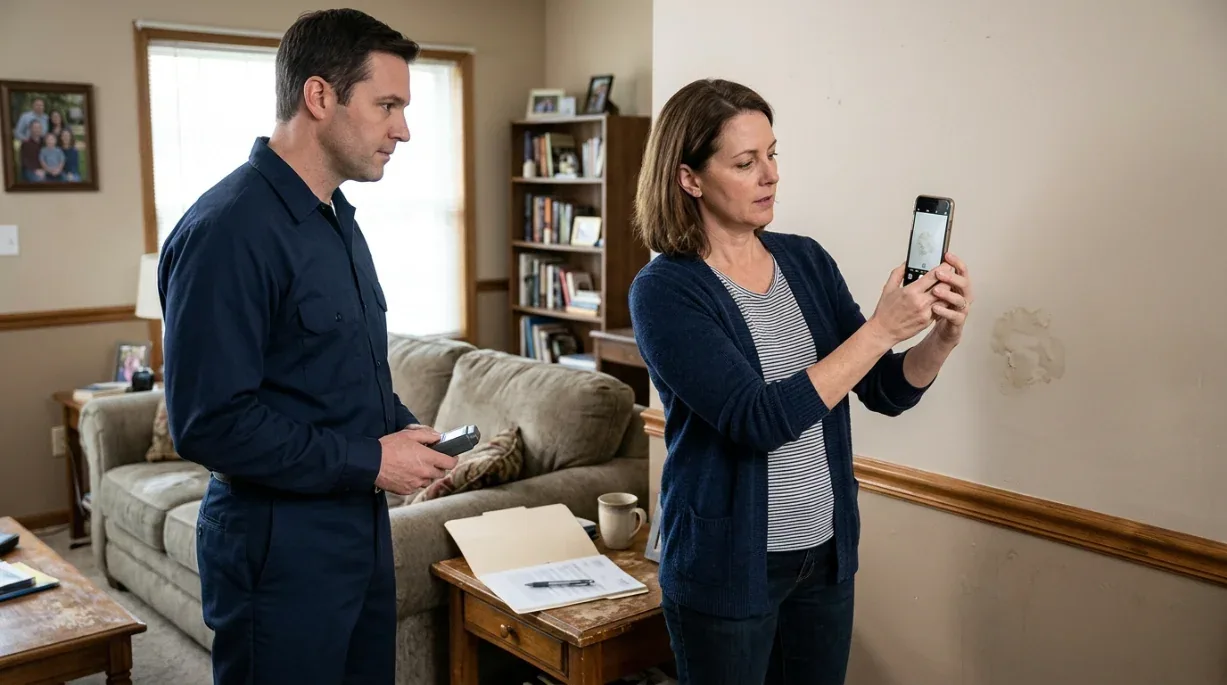
- Document before anything is touched. Photograph the damage, the damp areas, the meter reading and the bills.
- Establish that it was sudden. The distinction between a sudden failure and long-term seepage decides many claims. Note when symptoms first appeared.
- Get a written leak detection report. Location, method used, probable cause, date. This is the technical evidence an adjuster works from.
- Stop the loss, but do not over-repair before reporting. Mitigate the damage, then notify the carrier before demolition or reconstruction.
- Keep every receipt. Detection, mitigation, repair, restoration, and any temporary accommodation.
- Read the exclusions yourself. Look specifically for earth movement, wear and tear, gradual deterioration, and any slab or seepage endorsement.
- Ask about the utility leak credit too. It is separate from insurance and covers the inflated water bill rather than the damage.
Frequently asked questions
Does homeowners insurance cover leak detection in Georgia?
Generally only as part of a covered loss. If a leak has caused damage your policy covers, insurers commonly pay for locating the leak, accessing the pipe and restoring what was opened. A standalone preventive inspection with no damage to claim is treated as maintenance and is usually not covered.
Does insurance cover slab leak repair?
Often it covers the resulting damage and the access and restoration work, but not necessarily the pipe repair itself, which many policies treat as maintenance. Coverage for under-slab leaks specifically was withdrawn by many carriers and later reintroduced as optional limited products, so it depends on what your policy actually includes.
What exclusions most often defeat a leak claim?
Earth movement, and gradual deterioration or wear and tear. A slow pinhole leak that ran for months can be characterized as gradual rather than sudden, which is why documenting when symptoms first appeared matters.
What does an insurer typically pay for on a slab leak claim?
A public adjuster describing common claim handling summarized it as leak detection, access to the pipe, treating the soil, and pouring new concrete into the void, in other words, reaching and restoring the covered structure, subject to your deductible and limits.
Should I file a claim before or after finding the leak?
Mitigate the damage immediately, then get the leak located and documented, and notify your carrier before demolition or reconstruction begins. Adjusters work from evidence, a written detection report showing location, method and probable cause is far stronger than a description after the fact.
Will a claim raise my premium?
That is a question for your carrier or agent, and it depends on your claims history and the insurer's own rules. For small losses it is worth comparing the likely payout after the deductible against the possible long-term cost before filing.
Is the water bill covered by insurance?
Normally no. Excess water charges are handled through your water utility's leak credit program, not through homeowners insurance. Cobb County Water System and Marietta Power & Water each run their own process.
Does State Farm or any specific carrier cover slab leaks in Georgia?
It depends on the individual policy rather than the carrier name. Slab leak coverage is commonly an optional endorsement rather than a standard inclusion, so two policies from the same insurer can differ. Check your declarations page and endorsements, and confirm with your agent.