
Last reviewed and updated: 2026-09-24
Polybutylene is a gray plastic supply pipe (blue for some exterior runs) installed widely across Georgia from roughly 1978 to 1995: a period that covers a large share of Marietta and Cobb County housing. It degrades from the inside and fails without warning, most often at the fittings. Because the material itself is the problem, locating and patching a single failure point usually only buys time, which is why a polybutylene leak is normally a whole-system conversation.
Polybutylene is the defining pipe problem in 1978-1995 Cobb County housing, which covers much of East Cobb and the Sandy Plains corridor. A first failure is repairable; the decision after that is on the repair options page.
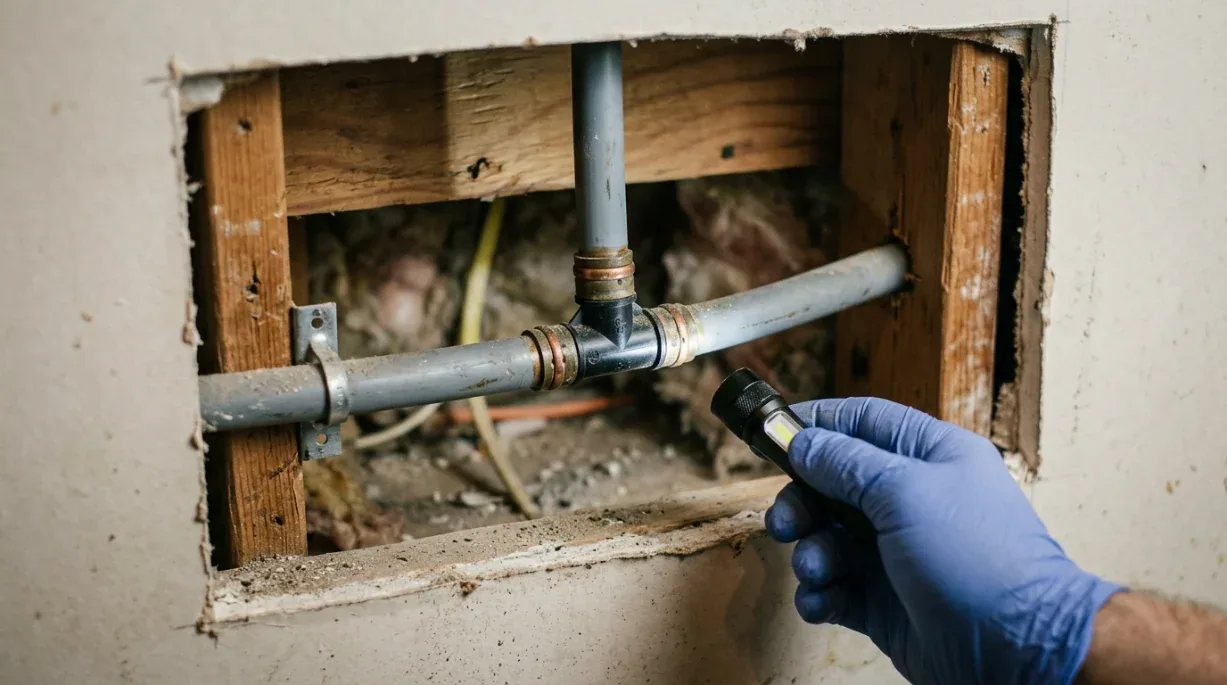
How to identify polybutylene in your home
- Color: gray is the common interior color; blue is often used for exterior or buried runs; black also exists
- Feel: flexible plastic, not rigid like CPVC and not metallic like copper
- Diameter: typically half-inch or one-inch
- Markings: often stamped PB2110 along the pipe
- Where to look: at the water heater, under sinks, at the main shut-off, and where pipe enters through the basement wall or crawlspace
- Build date: homes built roughly 1978-1995 are the window
Why it fails
Polybutylene degrades from the inside out. Oxidants in treated municipal water attack the pipe wall and, in many systems, the acetal fittings used at joints. Micro-fractures form internally, invisible from the outside, and the pipe or fitting eventually lets go. The characteristic pattern is a failure with no warning at all, no weeping, no gradual drip, just a sudden release.
That matters for two reasons. First, there are no early symptoms to act on. Second, a system that has produced one failure has been exposed to exactly the same conditions everywhere else.
Why it matters in Marietta specifically
Cobb County expanded heavily during the polybutylene era. A great many Marietta homes were plumbed with it, and a large portion of that pipe is still in service well past the point at which failures became common. It is one of the reasons repeat leak calls are so frequent in certain neighborhoods.
Repair or repipe
| Situation | Usual approach |
|---|---|
| First failure, rest of system intact | Repair the failure, then plan a repipe. Treat the repair as buying time, not as a solution. |
| Second or third failure | Repipe. Repeated failures confirm the material has reached the end of its service life. |
| Failure inside a finished wall or ceiling | Repipe is often better value once the walls are already open for damage repair. |
| Selling the property | Disclose it. Polybutylene affects buyer financing and insurance in some cases, and it will come up in inspection. |
| Buying a property | Identify it before closing and factor a repipe into your numbers. |
Insurance and polybutylene. Some carriers treat known polybutylene plumbing as a rated or excluded risk. If your home has it, check how your policy handles it before you have a claim rather than after.
Frequently asked questions
How do I know if my Marietta home has polybutylene pipe?
Look for flexible gray plastic supply pipe, blue for some exterior runs, typically half or one inch in diameter and often stamped PB2110. Check at the water heater, under sinks, at the main shut-off, and where the pipe enters through the basement wall or crawlspace. Homes built between roughly 1978 and 1995 are the window.
Why does polybutylene pipe fail?
Oxidants in treated municipal water attack the pipe wall and, in many systems, the acetal fittings at the joints. Micro-fractures form from the inside out, invisible externally, until the pipe or fitting gives way. The characteristic pattern is sudden failure with no prior weeping or dripping.
Should I repipe if I have polybutylene?
After a first failure, repairing and then planning a repipe is reasonable, but treat the repair as buying time. After a second failure, repiping is usually the better economics, because the rest of the system has been exposed to identical conditions and will fail on the same timeline.
Is polybutylene common in Marietta?
Yes. Cobb County expanded heavily during the polybutylene era, so a large share of Marietta housing was plumbed with it, and much of that pipe is still in service well past the point at which failures became common.
Does polybutylene affect home insurance?
It can. Some carriers treat known polybutylene plumbing as a rated or excluded risk. If your home has it, confirm with your carrier how the policy handles it before you need to make a claim.
Does polybutylene affect selling my house?
It generally comes up at inspection and should be disclosed. It can affect buyer financing and insurance in some cases, and buyers routinely price a repipe into their offer once it is identified.
Is blue plastic pipe also polybutylene?
Often, yes, blue polybutylene was commonly used for exterior and buried service runs, while gray was used indoors. Blue PEX also exists and is a different, sound material, so confirm by the markings and the age of the installation rather than by color alone.