
Last reviewed and updated: 2026-09-28
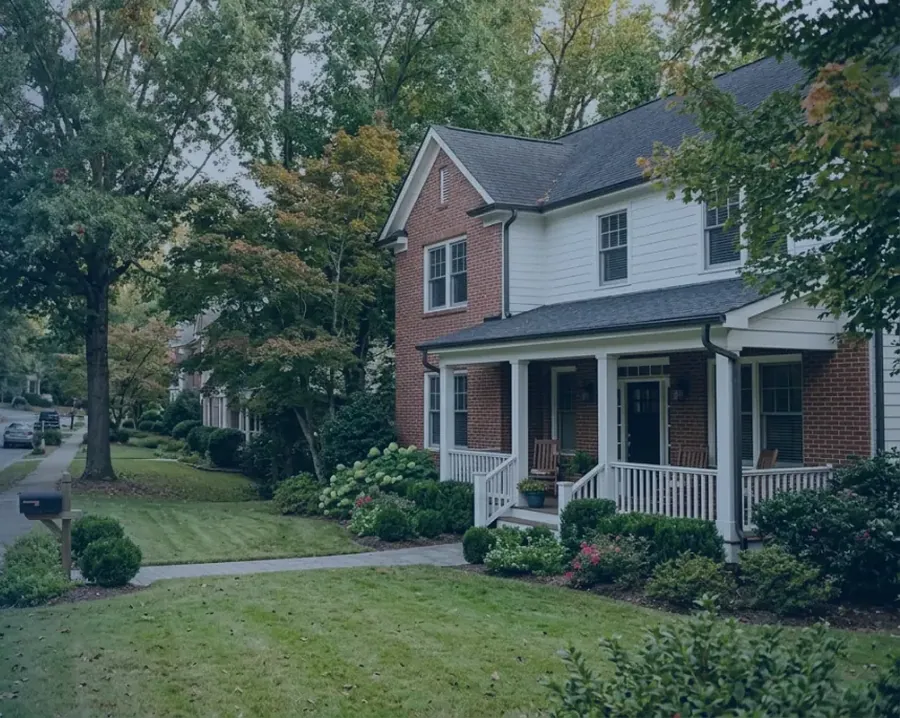
Westside Subdivision is a named residential community in the Marietta area. In neighborhoods built out in a single phase, the plumbing tends to be consistent from house to house, same era, same material, same installer, which makes diagnosis faster and means failures often arrive in clusters rather than one at a time.
The starting point is always the same: confirm the leak at the meter, establish whether it is inside the house or out in the buried service line, then locate it without opening anything.
Supply leak or drain leak: the timing test
One observation you can make yourself narrows the problem in half, and it costs nothing.
A supply line is pressurized all the time, so a supply leak runs constantly, day and night, whether anyone is home or not. A drain line only carries water while something is draining, so a drain leak appears in the minutes after a shower, a bath, a dishwasher or a washing-machine cycle, and then stops.
That distinction decides which equipment is used. Pressurized leaks are found acoustically, by listening for the hiss of escaping water through concrete or soil. Drain leaks make almost no sound at all, so they are diagnosed with a camera inspection, smoke testing or a hydrostatic test instead. Tell us which pattern you are seeing and the visit gets considerably shorter.
What you can safely check yourself
There is a short list of things worth doing before calling anyone, and a shorter list of things not worth attempting.
Worth doing: the meter test; the toilet dye test with food coloring; checking the water heater pan and relief valve; isolating irrigation and re-testing the meter; walking the lot for a soggy or unusually green patch; and reading static pressure with a cheap gauge on an outside tap.
Not worth doing: opening a wall or floor under a stain to look. Water travels along framing before it appears, so the visible damp is a poor guide to the source, and exploratory openings usually miss, leaving you to pay for drywall repair somewhere that was never the problem.
What your insurance will and will not pay for
Georgia homeowners policies generally pay for leak detection only as part of a covered loss, not as a standalone inspection.
Where a leak has caused damage your policy covers, insurers commonly pay to locate the leak, gain access to the pipe, and restore what had to be opened. What a policy does and does not cover is set out on the homeowners insurance page, a public adjuster described typical handling as covering "leak detection, access to the pipe, treating the soil, and pouring new concrete into the void." The pipe repair itself is frequently treated as maintenance and excluded.
The two exclusions that defeat most claims are earth movement and gradual deterioration or wear and tear. A slow pinhole that ran for months is easy to characterize as gradual, which is why documenting when symptoms first appeared matters so much. Read your own policy, and speak to your carrier before work begins.
Water bill jumped and you cannot see why?
We locate the cause and put it in writing, which is the document Cobb County Water System and Marietta Power and Water both ask for.
Document it before anything is closed up
This is the step most people skip, and it costs them twice.
Your water utility will not apply a leak credit without evidence the problem was corrected, Cobb County accepts a repair receipt, a parts receipt, or at minimum a letter explaining what was done. Your insurer works from the probable cause and from whether the failure looks sudden or gradual, because gradual deterioration is one of the exclusions that defeats most claims.
All of that is easy to capture while the repair is open and effectively impossible once the slab is repoured and the wall is patched. Ask for photographs before opening, with the failed pipe exposed, and after the repair; a written statement of what failed and why; and the itemized invoice, emailed rather than handed over as a paper slip.
Which water utility bills you here
Most addresses outside the City of Marietta utility service area are billed by Cobb County Water System, which allows a partial leak credit once per rolling 12-month period across no more than two affected months, with proof of repair required. A Marietta mailing address does not by itself make you a city utility customer, the name printed on your bill is what settles it.
Local notes
Where lots are larger, the buried service line from the meter to the house is longer, sometimes a hundred feet or more. That is a lot of pipe, and when it fails the water drains into the soil producing no indoor symptom at all, just a very large bill.
Frequently asked questions
Do you cover Westside Subdivision?
Yes. Westside Subdivision is within our regular Marietta and Cobb County service area.
Which water utility serves this community?
Most addresses outside the City of Marietta utility area are billed by Cobb County Water System, which allows a partial leak credit once per rolling 12-month period across no more than two affected months. Confirm from the utility name on your bill.
What is the first thing I should do?
Run the water meter test. Turn everything off and watch the low-flow indicator, any movement confirms a leak. Closing the main house valve and re-checking then tells you whether it is inside the house or in the buried service line.