
Last reviewed and updated: 2026-09-28
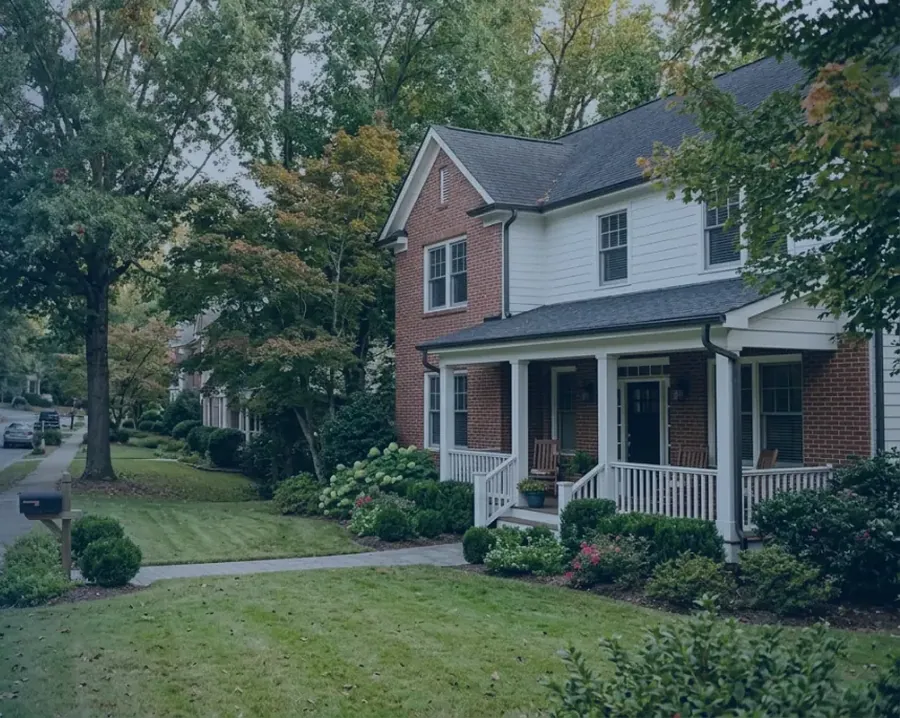
Hamilton Grove is a named residential community in the Marietta area. In neighborhoods built out in a single phase, the plumbing tends to be consistent from house to house, same era, same material, same installer, which makes diagnosis faster and means failures often arrive in clusters rather than one at a time.
The starting point is always the same: confirm the leak at the meter, establish whether it is inside the house or out in the buried service line, then locate it without opening anything.
Polybutylene: the Cobb County problem pipe
Polybutylene supply pipe was installed widely across Georgia between roughly 1978 and 1995, which covers a large share of Cobb County housing. It is gray indoors, sometimes blue for exterior runs, and often stamped PB2110.
It degrades from the inside out. Oxidants in treated municipal water attack the pipe wall and the acetal fittings, micro-fractures form internally where nobody can see them, and the pipe or fitting eventually lets go, with no weeping, no gradual drip, no warning at all. Polybutylene leak detection starts by identifying the pipe at the water heater.
That matters twice over. There are no early symptoms to act on, and a system that has produced one failure has been exposed to identical conditions everywhere else. Check at the water heater, under sinks and at the main shut-off. If you find it, the conversation is usually about the whole system rather than the single failure point.
Water pressure as an early warning
Pressure is one of the few things that tells you something is wrong before any water appears.
A sudden drop across the whole house usually means water is escaping before it reaches your fixtures, a valve has partly closed or failed, or the utility is working on the main. Ask a neighbor first, if their pressure dropped too, it is the utility and not your plumbing. If the drop is only at your house, see sudden low water pressure. A drop confined to one fixture is almost always a blocked aerator or a worn cartridge.
Pressure that is too high is its own problem. Sustained static pressure above roughly 80 psi shortens the life of supply lines, water heaters, valves and appliance hoses, and contributes directly to pinhole leaks. A gauge that screws onto an outside tap costs very little. If a house has had several unrelated leaks, a failed or missing pressure-reducing valve is worth ruling out.
The seasonal pattern in your bill
Twelve months of water bills is one of the most useful diagnostic documents you can bring to a conversation about a leak, and almost nobody thinks to look at it.
A bill that climbs every spring and settles every autumn points at irrigation, either a genuine leak in the system or a controller running longer than anyone realizes. A bill that steps up once and then stays high points at a continuous failure: a service line, a slab leak, or a toilet that never stops filling. A bill that spikes for a single month and returns to normal is usually a one-off, such as filling a pool or pressure washing.
Most utility portals show a year of usage history as a chart. Look at the shape before you assume anything: it frequently identifies the culprit before anyone opens a toolbox.
Rather talk it through first?
No forms and no waiting for a callback. Speak to a technician, describe what you are seeing, and get a straight answer about what it takes to find it.
A bill that jumped, with nothing visible
The most common call is not a flood. It is a water bill that doubled with no change in habits and nothing wrong that anyone can see.
The usual causes, cheapest first: a toilet flapper that no longer seals, an irrigation valve that will not close fully, a buried service line leak draining into the soil, and a supply line failing under a slab. The full order of checks is on the high water bill page. A Cobb County household reported 89,000 gallons producing a bill of roughly $1,400. That volume does not come from a drip. It comes from something running continuously for weeks.
Rule out the toilets first. Food coloring in each tank, twenty minutes without flushing, then look in the bowl. Color in the bowl means that flapper is leaking, and it is a few dollars to fix.
Which water utility bills you here
Most addresses outside the City of Marietta utility service area are billed by Cobb County Water System, which allows a partial leak credit once per rolling 12-month period across no more than two affected months, with proof of repair required. A Marietta mailing address does not by itself make you a city utility customer, the name printed on your bill is what settles it.
Local notes
If your home was built between roughly 1978 and 1995, check the pipe at the water heater before anything else. Gray flexible plastic stamped PB2110 is polybutylene, and its failure pattern,sudden, at the fittings, with no warning: changes what a sensible plan looks like.
Frequently asked questions
Do you cover Hamilton Grove?
Yes. Hamilton Grove is within our regular Marietta and Cobb County service area.
Which water utility serves this community?
Most addresses outside the City of Marietta utility area are billed by Cobb County Water System, which allows a partial leak credit once per rolling 12-month period across no more than two affected months. Confirm from the utility name on your bill.
What is the first thing I should do?
Run the water meter test. Turn everything off and watch the low-flow indicator, any movement confirms a leak. Closing the main house valve and re-checking then tells you whether it is inside the house or in the buried service line.